01
Blank Manufacturing
To meet the diverse needs of our customers, Zhejiang LiQun employs two distinct manufacturing processes:
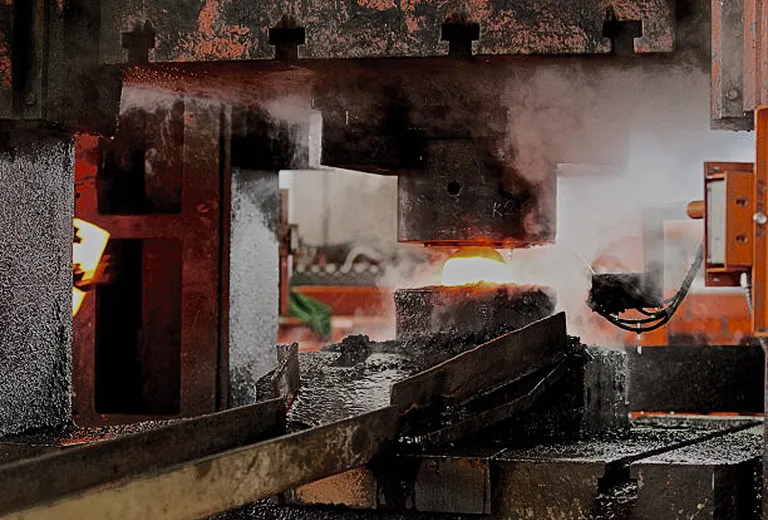
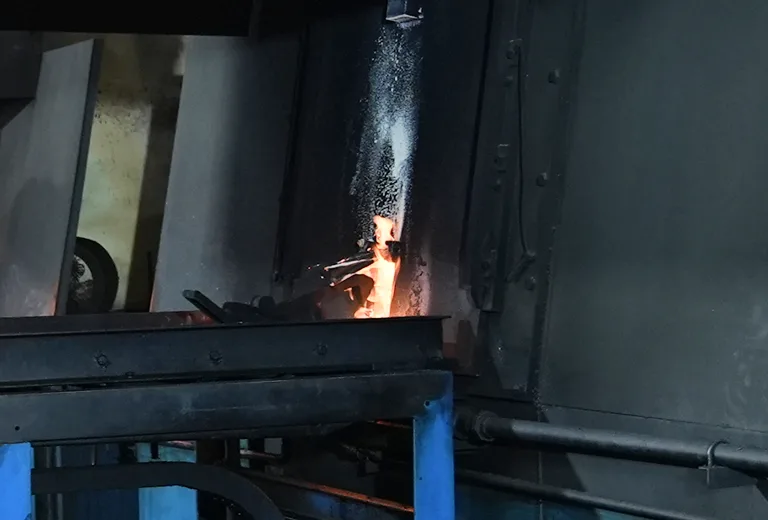
Hot Forging
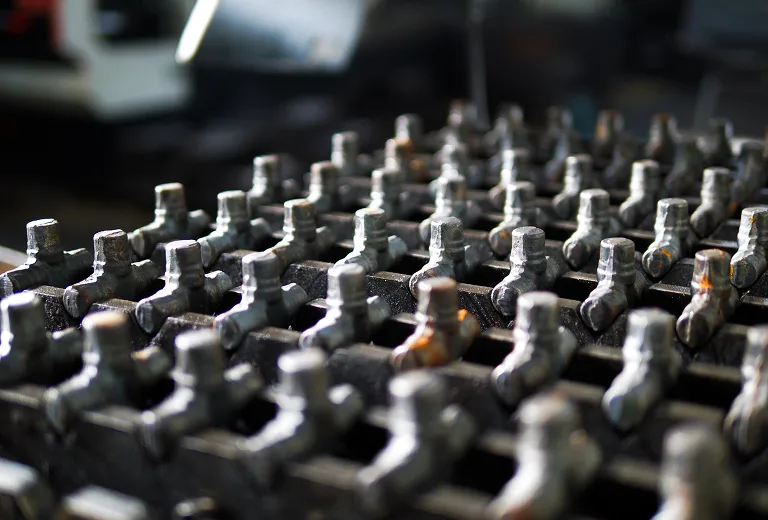
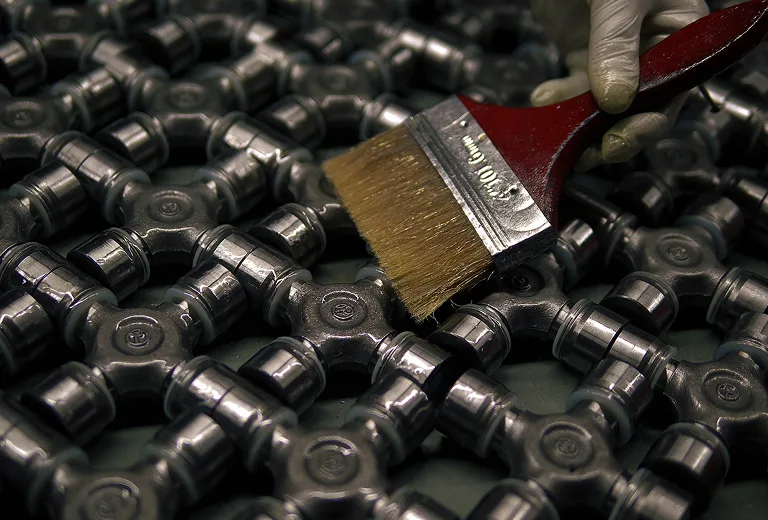
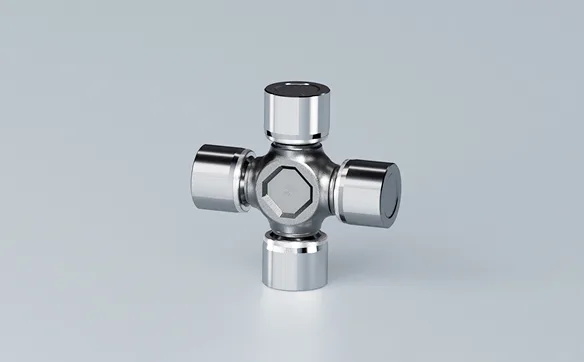
In the forging process, cut steel bars are heated to a forging temperature of approximately 1100–1200°C and then precisely shaped using die forging machines. This process allows the four trunnions and body of the universal joint to be formed in a single operation, ensuring superior structural integrity and strength.
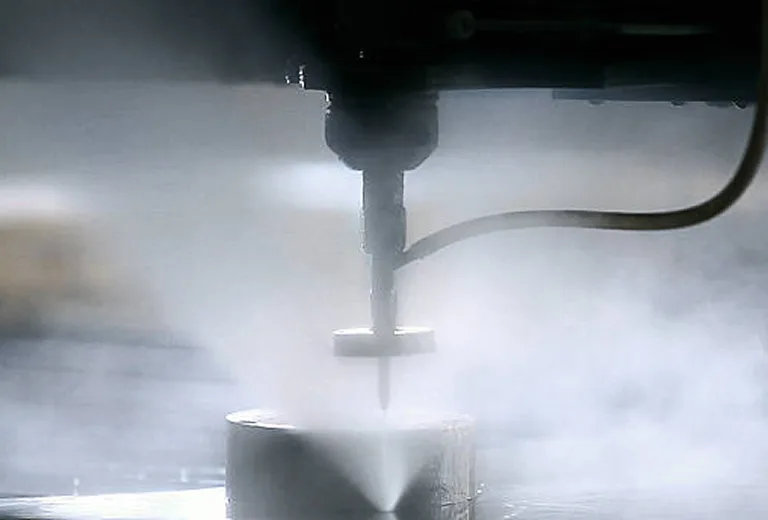
Cold Extrusion/Cold Forging
We also utilize a more advanced cold extrusion process, in which the steel is formed at room temperature. This method offers several advantages, including higher dimensional accuracy, smoother surface finish, and improved material utilization, resulting in components that meet the highest performance and efficiency standards.
02
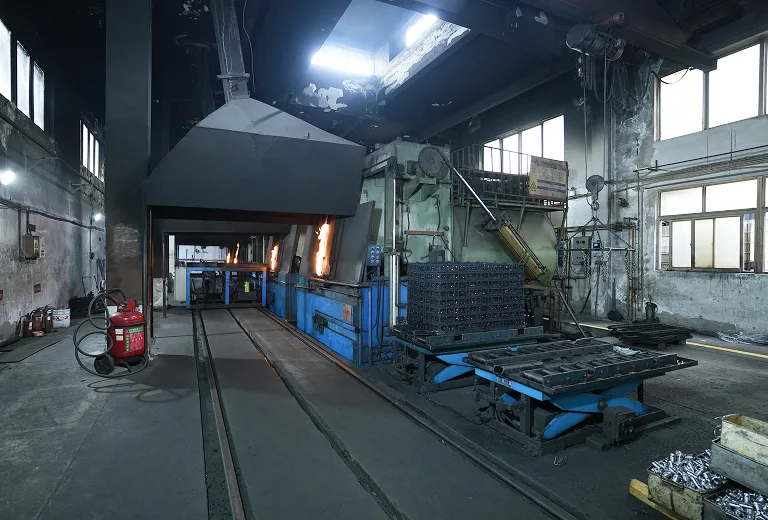
Heat Treatment
Heat treatment is a critical process that determines the performance and service life of a universal joint.
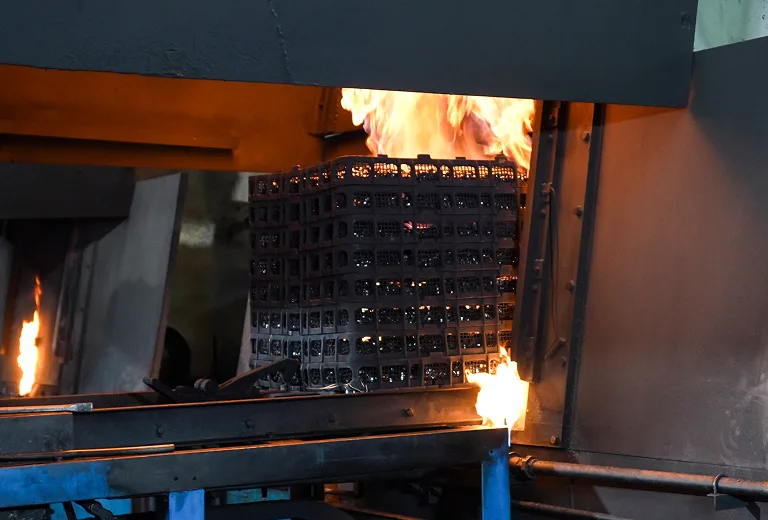
Carburizing
The process begins with carburizing, in which carbon atoms penetrate beneath the surface of the steel. The resulting carburized layer reaches a depth of approximately 0.5–1.0 mm, enhancing surface hardness and wear resistance.
Quenching
After carburizing, the workpieces are rapidly cooled through quenching, transforming the high-carbon surface layer into a high-hardness martensitic structure.
Tempering
Finally, low-temperature tempering is performed at 150–200°C to relieve stresses from quenching, stabilize the microstructure, and improve toughness.
As a result, the surface hardness of the universal joint can reach HRC 58–64, while the core hardness remains approximately HRC 30–45, achieving an optimal balance of strength and durability.
03
Precision Machining
Reference Processing
The forged blanks are first roughly machined to create a ss central hole or cross-section, providing accurate reference points for subsequent operations
Drilling and Tapping
Threads for lubrication fittings are machined on the body of the universal joint, ensuring proper installation and maintenance of lubrication points.
CNC Machining and Grinding
Turning/Grinding – Semi-Finishing : Removes the majority of the material allowance.
Milling : Machines lubrication grooves and holes at the ends of the trunnions.
Post-Heat Treatment : Performs precision or super-precision grinding on all four trunnions to achieve final dimensional accuracy.
04
Surface Treatment
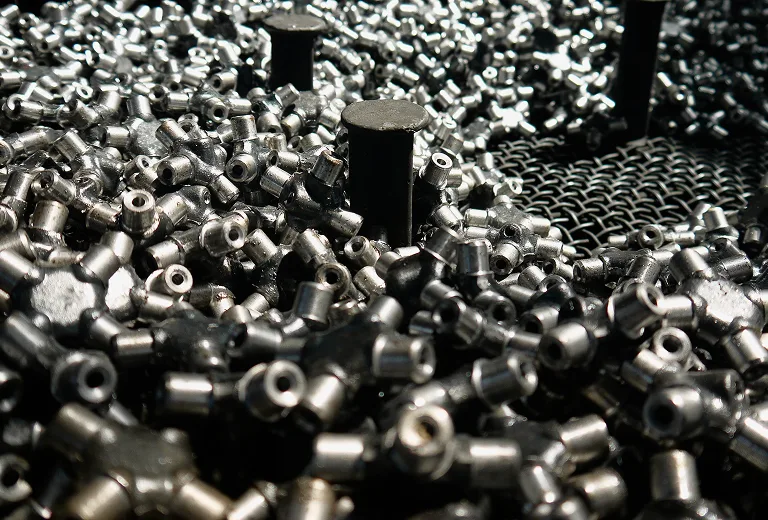
Shot Blasting
The ground trunnions are further polished to reduce surface roughness, minimizing friction and wear with needle bearings during operation.
Rust Prevention
We apply phosphating, blackening,eletroplating or oil coating treatments to protect the components from corrosion during storage and transportation.
05
Assembly and Lubrication
Assembling
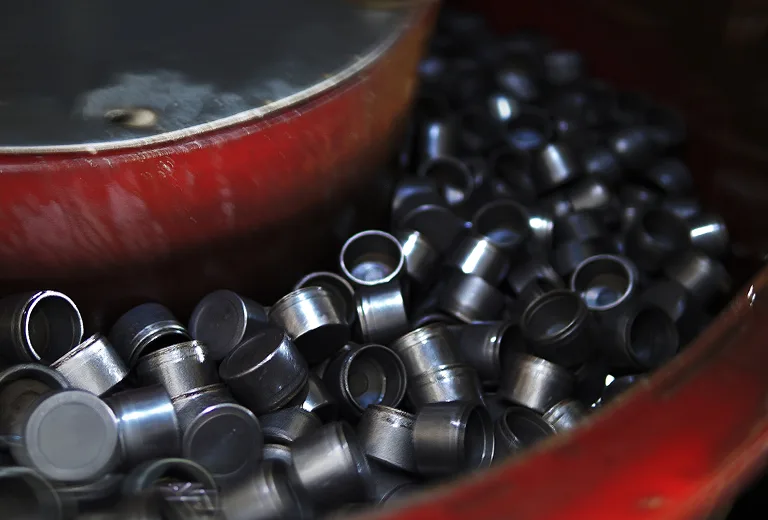
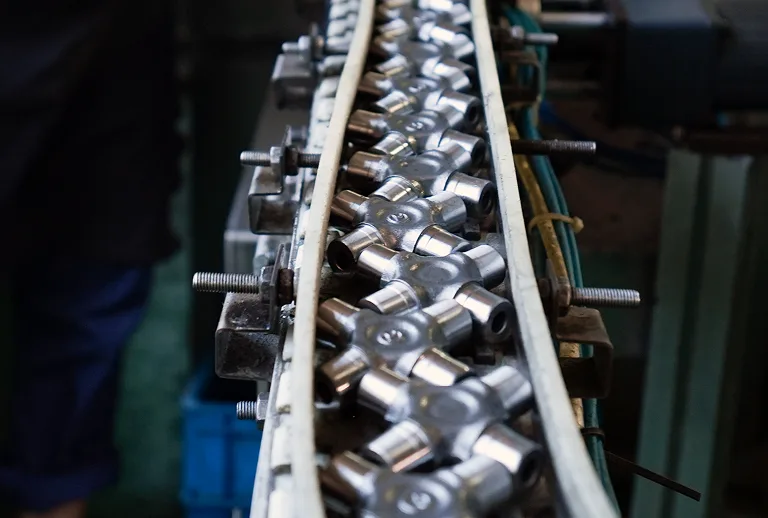
We adopted fully automated assembly technology for the bushing assembly, pressing the cross shaft, needle roller bearing, oil seal, etc. into the bearing housing hole of the universal joint and fixing them with snap rings or end caps.
Lubricating
Regarding grease brands, we choose to cooperate with major domestic and international brands to ensure consistent quality. We also select different greases based on their characteristics to cope with high and low temperature working environments, and provide dedicated greases for heavy-duty or special vehicles.
06
Final Inspection
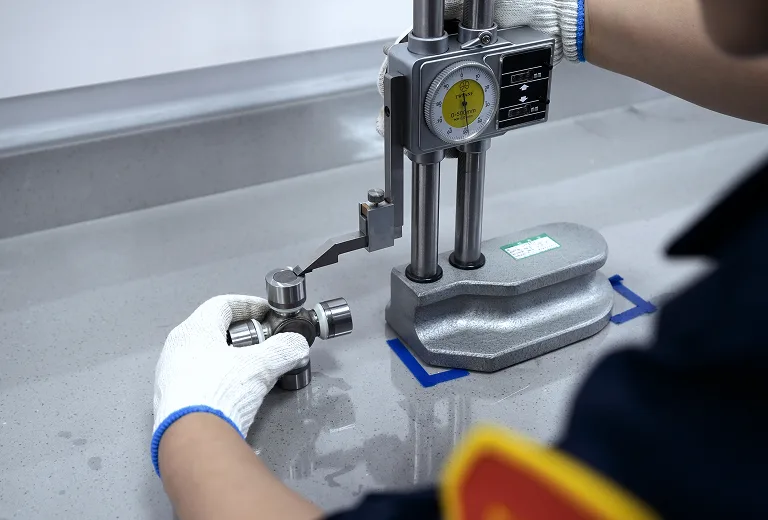
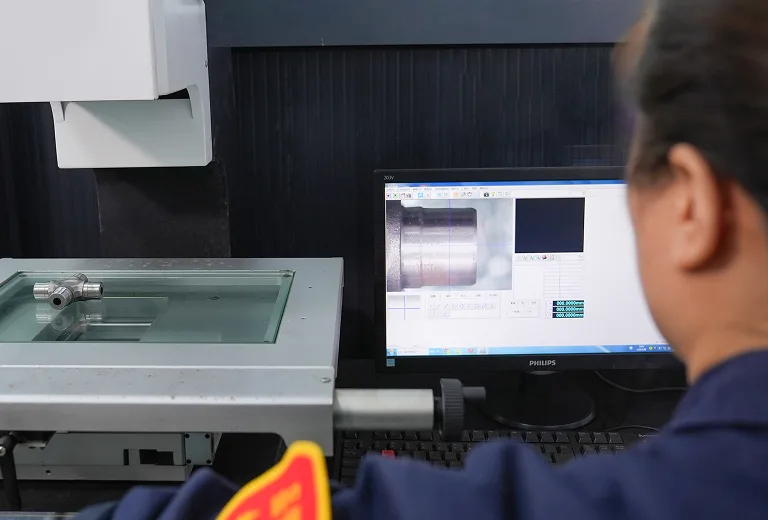
Dimensional Inspection
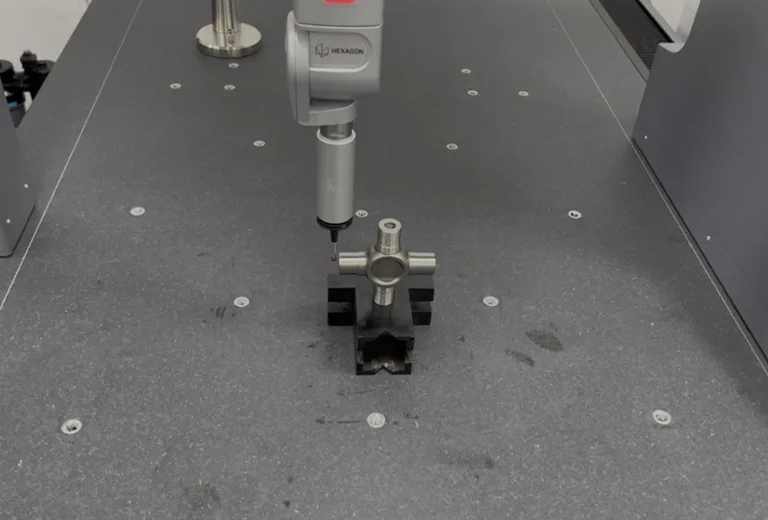
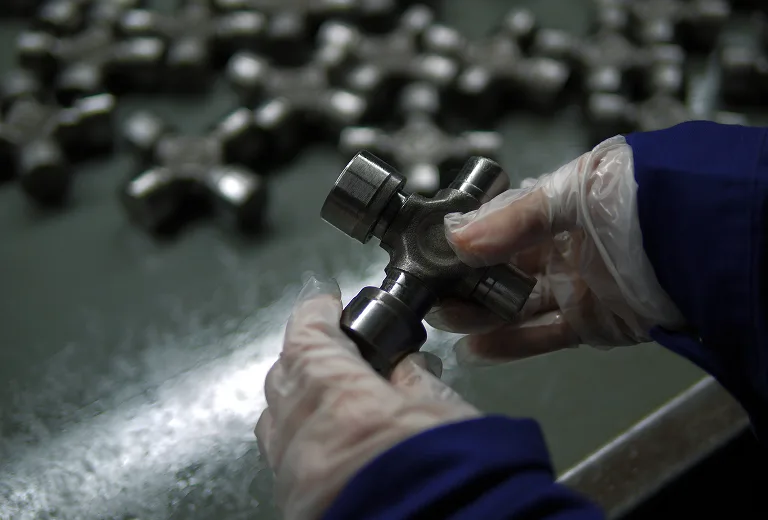
All critical dimensions are thoroughly measured using vernier calipers or micrometers to ensure accuracy and consistency.
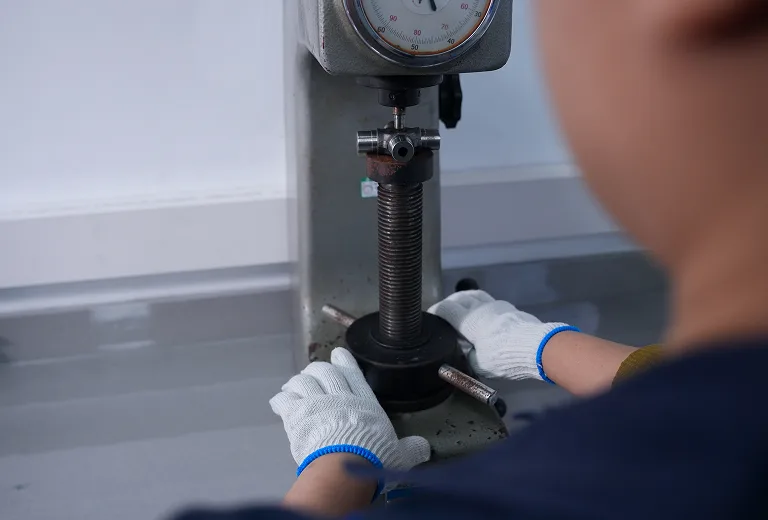
Hardness Testing
Surface and core hardness are checked using Rockwell or Vickers hardness testers, verifying that the components meet specified mechanical requirements.